Recently I picked up the clarinet again and have been practicing various Klezmer songs, including one of my wife's favorites: Papirosen. A sad song about a boy selling cigarettes on the streets during WW II in order to stave off hunger and avoid the fate of his sister who died from exposure.
I found this brilliant rendition on youtube by a duo known as the Klezmer Gourmets.
I was shocked and saddened to read in the comments that the violinist Michael Kahan was stabbed earlier this year by a 'discharged schizophrenic' in Macnhester.
This song will now be twice as sorrowful when I play it. Rest in peace Michael Kahan.
On Saturday my lovely wife Penelope and I completed what Backpacker Magazine calls America's 5th Hardest Day Hike. The Cactus to Clouds hike begins in Palm springs at roughly 600 feet above sea-level and tops out at the peak of Mt. San Jacinto at 10,800 feet. The grueling day hike covers over 23 miles, one of which takes you up almost 2,000 vertical feet.
Friday night Penelope and I stayed in Palm Springs at an amazing hotel, which also happens to be #1 in the country on Trip Advisor, called the Desert Riviera. The hotel and its owners are really amazing, and a subject of a future post on this blog. On Saturday morning we woke up at 2:45 a.m. and headed out to the trailhead.
We hit the trail at around 4:00 a.m. with our headlamps blazing. After hiking for 15 minutes the trail petered out and we were left wondering where to go. Penelope became worried that we were never going to find the trail and wanted to go back to the car and try from a different trailhead.
The other trailhead has an even harder-to-find trail so I decided that would be a bad idea. I told Penelope to relax and we backtracked a few hundred yards at which point I saw a white arrow spray-painted on a rock facing uphill. I followed the arrow and we were back on the path to the peak.
After two miles we came to a rock with white writing painted on it which told us to make sure we had plenty of water and that we had 8 miles and 10 hours to go. From what I've read, the actual distance from this point is closer to 10 miles. We hiked on for another hour or so when we saw another headlamp behind us and one ahead of us.
As the sun rose we saw the hiker behind us was a gray-haired woman. She was quickly gaining on us, but she ended up taking a shortcut and was suddenly way ahead of us. We never did catch up to her!
Around 6:30 a.m. the sun began to rise. We had gained a few thousand feet of elevation by that point and the sunrise was beautiful, one of the most enjoyable experiences of the hike.
For the first 9 miles the trail gradually gained altitude, then all of the sudden it basically goes nearly straight up for 3 miles. These miles were difficult and challenging with a steep, loose, rocky trail winding to Grubb's Notch. It was slow-going but we made it to the traverse, which was a welcome change in pace.
After traversing for half a mile we started back up on our final push to the top of the Skyline trail. The last quarter mile was almost straight up, but we were so close we powered up without stopping except to talk to a ranger.
The skyline trail ended up taking us about 8 hours including breaks. We sat down at the ranger station, filled out our permit and ate lunch.
Most people just do the Skyline trail and take the tram down. We decided to do the full Cactus to Clouds and hit the peak. After lunch we powered on up the final 5 and a half miles to the top. As we ascended the temperature dropped and the during the last few miles we were shrouded in clouds.
On our Deer Springs hike to San Jacinto the week before we spent a half hour on the peak and ate lunch. This time we took a few photos, sent out a SPOT message and quickly headed down.
We were very happy to reach the tram station 14 hours after starting our hike in Palm Springs. We felt good that we stuck through it and completed the hike, but boy were we tired. I can't wait for the next (hopefully shorter) hike, maybe it will snow and we'll do some snowshoeing!
If you're up for a serious, grueling, extreme-dayhiking challenge, definitely give the Cactus to Clouds hike a try. Just make sure to bring plenty of water (we brought 1.5 gallons each) and to train for it with at least a 5,000 foot elevation gain hike a few weeks before. Have fun and happy hiking!
Penelope and I stand on the peak of San Jacinto at the apex of our Cactus to Clouds hike.
The sun rises a few hours into our Cactus to Clouds hike.
Coffman's Crag juts out from the mountainside after the hardest part of the Cactus to Clouds hike.
Click here to see the rest of the photos from our Cactus to Clouds hike.
Today I created a Ruby on Rails module to calculate shipping from FedEx. I based it on a similar module from Ben Curtis which he wrote to calculate UPS shipping.
We both based our modules on the Shipping ruby gem, which hasn't been updated in several years and no longer works with the current version of Rails as far as I can tell.
My module is pretty straight forward, you feed it your zipcode, total weight and number of boxes and it gives you an array of prices and methods available from FedEx. You call it like this:
fedex = FEDEX::Client.new :account => '1000000', :meter => " 1000" , :origin_zip => '90000', :url => 'https://gateway.fedex.com/GatewayDC' fedex_quote = fedex.rate_list '80000', '500', '20'
You can check out and download my FedEx shipping calculator module here on pastie.
Category: Technology(101)
Police shot a homeless man brandishing a knife around 1:30 p.m. today shutting down several blocks around 6th and Stanford. The ensuing investigation prevented access to the UCEPP building where the Skid Row Photography Club holds its meetings.
According to an eye-witness, the police officers asked the man to put the knife down. When he allegedly lunged at them, they opened fire and shot him. The police then proceeded to handcuff him and called an ambulance.
The eye-witness noted that the ambulance took an unusually long time to arrive, upwards of 20 minutes. Normally emergency services arrive very quickly in Skid Row as their station is just a few blocks away. The suspect was still alive when loaded into the ambulance, but his current condition is unknown.
The Skid Row Photography Club, of which I am a co-founder along with Michael Blaze, meets every Tuesday at 3 p.m. at the UCEPP center. We have a gallery show coming up starting with a soft opening in the beginning of November at Stella Dottir's shop and gallery. The official opening will be during the Downtown Art Walk on the 13th of November.
I am very excited about the opening. The group has produced an amazing body of work. Too much to display in just one show. The website will be up soon so and you'll be able to see this wonderful work for yourself.
The crime scene from an officer involved shooting inconveniently blocks access to the Skid Row Photography Club meeting in this photo from earlier today.
The UCEPP building is inaccessible for the Skid Row Photo Club meeting due to an investigation of an officer involved shooting that happened earlier in the day.
Update: ABC 7 has a story along with video and photos from my eye-witness.
Last Saturday Penelope and I hiked to the top of Mt. San Jacinto via Deer Springs Trail. It was our most challenging hike so far, covering nearly 20 miles with 5,200 feet of elevation gain.
San Jacinto is the third tallest mountain in Southern California. If you've ever driven out to Palm Springs, it's that giant mountain that seems to explode out of the desert to the south of the 10 freeway.
There are several routes to the peak, one of which is to ride the tram and then take a reasonably short hike up from there. A much longer route is called cactus to clouds and is about 23 miles up with over 10,000 feet of elevation gain. We chose the next hardest route, up Deer Springs trail.
The Deer Springs trailhead is located less than a mile from Idyllwild. We pulled in to Idyllwild a bit later than we had intended and secured our permit. We hit the trail at 9:30 a.m. and started our way up.
The first seven miles were very gentle, gaining roughly 500 feet of elevation per mile. The scenery was beautiful with changing leaves in hues of gold and orange and lovely views down the mountain. The weather was perfect, nice and cool with a gentle breeze.
We averaged two miles per hour on the way up. For the last few miles we felt great. The seventh mile was the hardest, we gained about 1,000 feet in one mile, but even that wasn't very difficult.
We reached the summit of Mt. San Jacinto at 2:30 p.m. and ate lunch. The view from the top is spectacular especially on a clear day. We took a few photos and then headed down.
We chose a different and slightly longer route for our descent. We passed through several verdant cienegas. Cienegas are basically swamps, but beautiful and in the mountains. The three was hiked through were lush with foliage and water flowing through their muddy banks.
Our route down took longer than we originally estimated and the sun set while we were a couple miles from the trailhead. Being a former Boy Scout I am always (over) prepared and of course we brought our headlamps just in case.
For some odd reason, those last two miles seemed a lot longer than they did nine hours earlier! We ended up back at the car right around 6:30 p.m.
The Deer Springs trail is a wonderful route up to San Jacinto. It was great training for our upcoming cactus to clouds hike. We look forward to doing it again soon.
The setting sun casts a red glow on the ground behind Penelope during our hike down from San Jacinto.
Dave and Penelope pose for a photo after reaching the peak of Mt. San Jacinto.
The view is beautiful from halfway up the Deer Springs trail.
I have an addiction to photo gear. I own a crapload of equipment and I'm always buying new stuff to the delight of my accountant wife. Along the way I've gone through a number of camera bags, each progressively better than the last.
I started out with a smallish Lowepro bag when I bought my first SLR. It had this incredibly dangerous problem in which the plastic buckle that held strap on would randomly come loose. I remember when I was at Samy's Camera talking to a saleperson and told him about my problem. He said that's why I should use Tamrac, as it's the best bag around. Ever since then I've been a Tamrac guy.
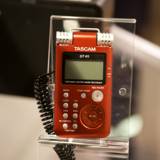
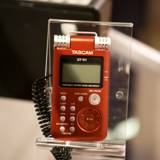
I started out with and older version of the Tamrac 5502, which is a relatively small bag. It worked fine when I had one camera, one lens and one flash. As my photo equipment collection expanded, I quickly outgrew the 5502. I currently use it to hold my Sony PCM-D50 audio recorder, Sennheiser MD46 ENG mic, Sennheiser HD 25-1 II headphones and various cables.
While I still used this bag for my SLR, I bought a nice selection of medium format Mamiya cameras and lenses from eBay on the cheap. I needed a giant bag to hold all of them. Tamrac used to make a bag specifically for medium format cameras called the Tamrac 622 [photo here]. They no longer make it, but I found one on eBay and purchased it. It's a great (both in size and functionality) bag. I don't shoot medium format as much as I would like, but at least it's well protected in that massive 622.
My next bag was the Tamrac 5608. The 5608 holds two cameras with lenses attached along with several other lenses, flashes, HV batteries, etc. This worked well for me until I picked up the tack-sharp Canon EF 70-200 f/2.8 L IS lens. Unfortunately I couldn't leave this lens on the cameras that were in the 5608. At one point I missed an amazing shot of a hawk while I scrambled to change the lens.
The missed shot happened during my vacation in Santa Fe, New Mexico with my lovely wife Penelope. Shortly after that we hit a local photo store where I purchased the Tamrac 617, also known as the Super Pro 17. It holds two cameras with lenses attached, including one with the 70-200 on it. It also has room for another lens, a flash, cables and various other accessories. I now use my 5608 to hold my flash gear. The 617 is awesome and is my current camera bag.
The Pro 17 has one problem, it doesn't have room for my laptop. Because of this I have a backpack with my laptop and cables in it and a camera bag. This results in me frequently being without my camera as it's a pain to carry two heavy bags. I recently went to Samy's to check out a bag that I've had my eye on for some time now.
The bag I've been lusting over is the Tamrac 619 also known as the Pro 19. This bag is awesome. It's wider than the Pro 17 so it has room for two or three more lenses. It also has side pockets which will let me stow either my audio equipment or HV battery packs. Finally, and most importantly, it has room for a laptop and cables.
I ordered the Pro 19 tonight from amazon. Once I have it, I will rarely be without my camera gear. Hopefully this will allow me to take more photos for fun, as opposed to just shooting when I'm on assignment. I'm really looking forward to its arrival, Tamrac bags are wonderful and I fully endorse and recommend them.
I shot this gallery yesterday and my editor and I turned it around in less than 24 hours. You can view the gallery here on Wired, if you like it, give it a digg.
Screen-grab hosted by flickr.
Yesterday Penelope and I hiked to the top of Mt. Wilson. It was a tough hike, but well worth the views, plus it's always nice to get a good 6 hour workout!
We started our hike from the trailhead on Mt. Wilson Trail road at roughly 9:30 a.m. The first two miles of the trail was highly trafficked with dozens of day hikers. This part of the trail is also barren thanks to a recent fire and in the morning the sun really beats down on you.
After a mile and a half we passed a fork down to the First Water swimming hole. Once past First Water we hardly saw any other hikers.
3.5 miles into the trip we reached Orchard Camp. This was the halfway point so we stopped and had some snacks and hydrated. We met two mountain bikers at Orchard Camp, they were the only folks on bikes we saw during out hike.
After snacking we headed up to the Winter Creek trail intersection. The last half mile before the intersection was the hardest part of the hike. The trail was narrow and exposed at times and there was little tree cover to shade us.
Once at Winter Creek trail we were excited to only have another 1.7 miles to go and we headed up the half mile and 500 feet of elevation gain of switchbacks to the old Mt. Wilson Toll Road. We followed the old road a half mile and then we took the small trail the final .7 mile up to the peak.
I always let Penelope lead because I tend to walk to fast and tire myself out and she's great at pacing us. For the last leg of the hike she was doing double time and we made it up to the peak quickly.
Once at the top I saw the parking lot and the tourists that drove up and said, "Wait you can drive up here?" Of course I knew there was a road up, but it was still funny at the time. Once at the peak we sat at a picnic bench and ate our lunches before heading down.
Going down the mountain is obviously faster than going up. What took us over three and a half ours to go up took us just over 2 hours to come down. We arrived at the trailhead seven hours after we started out, which includes roughly an hour for our snack and lunch breaks.
So the final stats: 6 hours of hiking time, 14 miles and 4,700 feet of elevation gain. It was a fun hike, although not as visually stimulating as Mt. Baldy. I'm not sure if this will be a repeat hike, but we definitely plan to drive up and do the observatory tour at some point.
San Gorgonio rises above the smog in the distance in this photo taken from the peak of Mt. Wilson on Sunday.
Dave and Penelope stand happily atop Mt. Wilson after hiking to the top in just over 3 hours on Sunday.
A wide array of antennas cover a hill close to the peak of Mt. Wilson.
Awesome, internet-venerable website BoingBoing posted up a link and photo from my Industrial Landscapes series. It doesn't say so anywhere on my site, but limited edition archival prints of most images are available to purchase in both 13"x19" and 17"x22" formats. Email me for price and availability.
Three weeks ago, my lovely wife Penelope and I hiked Los Angeles County's tallest peak, Mt. San Antonio, also known as Mt. Baldy. It was a great day hike, with a hefty elevation gain and beautiful views of Southern California.
We started out later than we had originally planned, this was due to me sleeping in. I realized later that I slept in because I was worried about being able to complete the hike.
The route we took was 12 miles round trip, with over 4,000 feet of elevation gain. Those 4,000 fee up occurred in the first four miles of the hike.
We parked at Manker Flats and took the fire road up until we reached the Baldy Bowl trail. The trail cuts almost straight up from the road and is easy to miss, but we had a picture which helped us find it.
We headed up the trail for about two miles when we reached the San Antonio Ski Hut, also known as the Baldy Hut. At the hut we met some cool folks from the San Diego SAR team who fed us fresh baked cookies. After hanging out for a few minutes at the hut we continued on up the Baldy Bowl Trail.
Shortly after leaving the hut we reached some very steep switchbacks. It was tough going, and for the first time I can remember on a hike, Penelope was in no mood to make small talk. After we crested the last switchback she was feeling better and the chatting resumed, thankfully.
A few miles and another couple thousand feet of elevation gain later we were at the top. It took us roughly three hours to get to the summit. We sat down and enjoyed our well-deserved lunch. After eating we hydrated, put on a layer and headed down the Devil's Backbone Trail.
After the first part where the trail got narrow, I said, this isn't so bad, I wonder why people write that it is scary. A few miles later we got to the actual backbone, which was only a few feet wide with steep cliffs on both sides. It's not too bad in the summer, but according to my SAR teammates, it's quite frightening in winter when it's a giant ice-covered cornice of death.
When we made it down to the ski area we contemplated taking the chairlift down, but decided against it and continued down the fire road. The fire road isn't the most visually stimulating area and its long, gradual slope made for a somewhat boring end to the hike.
By the time we got to back to the car we were ready to get home, relax and have some tapas at Ciudad. We were exhausted, but happy that we made it, the whole hike took us just about 6 hours round trip.
Baldy was a great hike and we're looking forward to doing it again soon. I would recommend it to anyone looking for a vigorous day hike.
The sky is clear in the view looking out from the first mile of the Baldy Bowl trail.
This steel marker sits on the peak of Mt. San Antonio, AKA Mt. Baldy, the tallest peak in Los Angeles County.
Penelope starts down the Devil's Backbone trail after reaching the summit of Mt. Baldy.
I have somewhat of a backlog of galleries for Wired.com right now. Earlier this week one of them posted, as well as a photo of my laptop. In case you were wondering I wrote all the captions and intros for the galleries, but the laptop one wasn't written by me.
This gallery is about a new technology that will allow a microscope to be squeezed onto a microchip.
That's my laptop.
This gallery is about a scientists at Caltech who have shrunken a still down to micro-size.
Category: Photography(191)
I'm looking for my old friend from junior high: Adam Starr. We both grew up in the East Bay. We were both part of the Jewish Youth Group up there. I've looked for him on facebook and google to no avail. If you're around man, shoot me an email: eecue@eecue.com
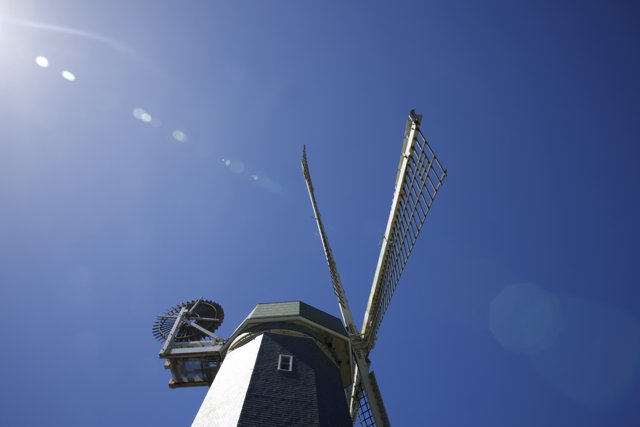
I took some photos of a beautiful sunset behind some of the Windmills near Palm Springs a few weeks ago. Here is the resulting HDR image:
Category: Photography(191)
Thanks to an unfortunate functionality change at the speech-to-text service Jott, I recently switched to reQall. Current generation speech-to-text (S2T) services allow you to call a toll-free number, record a short message and then actual humans transcribe your speech into text.
On my commute to and from work, I frequently think of new ideas for projects or tasks that I need to complete. I simply hit the S2T autodial and record whatever is on my mind. The S2T service then emails me the transcribed text.
OmniFocus, which I wrote about recently, has a nifty feature in which it grabs an email from Apple Mail with a predetermined sender and subject. It then adds the subject, which has the note in it, to my todo inbox. I think that S2T is one of my favorite tools of all time.
When I first heard of Jott, I was a bit skeptical. I didn't like the idea of a random person in some random country being paid a pittance to sit in a call center to listen to my thoughts and transcribe them. As I thought more about it, I realized that I would rarely if ever say anything confidential to the S2T service. So I started using Jott six months ago and I loved it. It was in beta and totally free.
Jott had some features that I rarely used, like the ability to send messages to any of my contacts. It also had features that I used every day, including its core function, speech-to-text. Once my note had been transcribed, an email with the note in the subject appeared in my inbox.
Recently, Jott stopped its beta program. In doing so it created a free plan, called Jott Express, which still allowed you to do S2T. The deal-killer was the fact that you now had to visit their website to retrieve the transcribed text.
That change broke my OmniFocus script. OmniFocus was expecting the transcribed text to show up in the email. There went the value of the service for me. I initially considered paying for the service, but decided to sleep on it.
I twittered a request for a Jott promo code, but instead got a response from a friendly hacker to check out reQall.
ReQall has the same basic functionality as Jott, but it's free. So far I have been very impressed with reQall. Its voice interface is slicker and more responsive than Jott's. ReQall also does a better job of transcribing my voice notes than Jott did.
All in all I'm very happy with reQall. If they end becoming a paid service I would choose them over Jott in a heartbeat.
Related Posts:
Category: Technology(101)
Many of my favorite childhood memories involve food. The smell of dinner fresh from the oven; the flavor of delicious home-baked goods; the joy that fills a happy kitchen. These visceral patterns were imprinted in my mind frequently during my youth and are still with me today.
At the center of many of my epicurean memories stands my beloved Grandmother, Vera Gordon. Clad in her apron, a smile on her face, a wooden spoon stirring a pot of bubbling borscht. Her food was not just made with love, it was love. And I loved every bite.
For my Grandmother's 90th birthday, my loving mother Rhoda created an amazing book honoring her cooking. Entitled "Vera's Table" this wonderful tome contained Grandma's best recipes. Each recipe was presented with a story written by a family member. I now, more than ever treasure this book and the recipes and stories it contains.
From pickles, to potato salad, from apple pie to poppy seed cookies I could never get enough of the wonderful delights she made. The pies she baked from the apples her loving husband Murray grew in their backyard were magical to me. It is something I will never forget, the time in her kitchen at her beautiful house by the sea in Santa Barbara.
My Grandmother also never forgot those joyful times, and one of her favorite stories was one that I don't actually remember experiencing. I was only nine months old on this particular visit to Grandma's house. On her table she had a big bowl of freshly made guacamole. To her great surprise and amusement I pointed at the bowl at the table and demanded "Taste 'em 'cados." ... see, even then I enjoyed eating.
My brother Dan and I always enjoyed our family trips to visit Grandma and Grandpa. Climbing the trees in the yard, eating (of course), causing mischief like little boys tend to do. I recall one time my Grandparents had just installed a brand new redwood fence around their yard. My brother and I were playing in the yard when I decided it would be fun to knock out the knots from their knot-holes with a metal bar. I encouraged my brother to join in and pretty soon we had turned the nice new fence into a wooden version of swiss cheese. That was the only time I saw my Grandmother truly upset, and looking back on the situation I don't blame her.
As Jewish Grandmothers tend to do, Vera always had advice for me. In my teenage years, this wasn't always easy to hear. No teenage boy wants to be told what to do, especially not by his Grandmother. Now that I think about it though, everything she told me was true, I was just to stubborn to listen.
Now that I've grown up, for the most part, I can reflect on the knowledge my Grandmother imparted to me. She told me about what it means to be a mensch and encouraged me to do the right things in life. To have a family and to raise them well. She didn't just tell me these things, she showed me by example.
I like to think I inherited some of my best qualities from my Grandmother: my humor, my wit, and of course my modesty, but most importantly my love of food and family.
Vera Gordon was a strong woman, a loving mother, a caring Grandmother, a powerful wordsmith, an amazing cook and a lifelong inspiration to me and many others. She will live on forever in our memories.
I just recently recieved one of The Great Internet Migratory Box(es) of Electronics Junk (TGIMBOEJ). The TGIMBOEJ is an awesome box of random electronics that various geeks send to each other. The idea was started by Lenore over at Evil Mad Scientist Labs.
Basically you put your name and contact info on a Wiki page devoted to perspective TGIMBOEJ recipients. Then someone finds your name on said list, and either creates a new box to send you or forwards on the box they currently possess.
The rules are simple, take what you want from the box, add some cool stuff, and then send it on to someone else in the list. You can see the status of the various boxes on this wiki page.
I received a box called Big Box of Electronic Booty started by someone who didn't add their info to the wiki. The box then made it to Jen Grier, who sent if off to Sidney who then sent it to me.
I will be mailing the box off on monday to Logan from Binary Tide.
I picked out a few cool parts including some LEDs, a giant buzzer and some zip-ties. I added a giant LED, a potentiometer and some other cool parts including a 1GB SD card.
The TGIMBOEJ project is awesome, I'm looking forward to receiving another box some time soon!
One of the items I kept from the TGIMBOEJ was the big red buzzer (upper left). I haven't hooked it up yet, but I bet it's loud!
After three years of life changing organizational goodness, I migrated my plain-text-based GTD system to OmniFocus.
My text list system has not been the most efficient implementation. I decided it was time for a standalone application. After reading this GTD application comparison and watching a screencast about OmniFocus I decided to download the trial and give it a shot.
OmniFocus is a slick application. Thanks to its Cocoa goodness, it integrates perfectly with OS X. It has an easy-to-use interface, but its plethora of features takes some getting used to.
The hardest part was manually importing my several hundred tasks and projects. I had to copy and paste these one by one. It would be a nice feature if OmniFocus could parse plain text files and import each line as a task.
Once my tasks were imported I created projects and folders as you can see in the screenshot below. I then created contexts, some of which you can see in the right hand column of the screenshot.
When I was using my text lists I didn't fully utilize contexts properly, but OmniFocus makes them easy to implement. You can switch to Context mode, select a context like "Office" and see all the tasks that can be done in your office.
OmniFocus has a nice feature called Perspectives, where you can save a predetermined view of your tasks. I have one which I use to implement Zen Habits MITs (Most Important Tasks). Every night before I go to bed I review my Next Actions perspective and flag the tasks I want to complete the next day. The MITs perspective shows my flagged items, which I then (in theory) do.
I also have the iPhone app installed. It's not cheap: $20, but it works fairly well apart from the syncing speed. It takes a very long time (5-10 minutes) to sync changes over the EDGE network, which basically make it close to useless for quick entry. If I know I'm going to be using is I can let it sync for a few minutes.
OmniFocus is supposed to sync to a WebDAV server, but it fails on my FreeBSD server running Apache 2.2.3. I am forced to sync using Apple's buggy Mobile Me. I hope they fix the WebDAV sync issues before my Mobile Me free trial runs out!
Despite the imperfections and relatively high price, I really like OmniFocus. As soon as they fix the syncing (or they stop extending the free trial) I will be purchasing a license.
This weekend my wonderful, beautiful backpacking wife Penelope and I hiked to the peak of the tallest mountain in Southern California: San Gorgonio.
We have been training every weekend for this backpacking trip by taking nice long day hikes. The difference between our day hikes and the San Gorgonio summit was its 24 mile length compared to the 6 mile trips and of course the fact that we were carrying heavy packs.
We started out early Friday morning and drove up the 38 and then seven miles on a dirt road. This road took us to the Fish Creek trailhead where we parked and started our ascent.
The trail was beautiful and green with a nice gentle climb of about 1,800 feet in six miles. We didn't see another person the whole day we were hiking. Fish Creek trail is definitely less crowded than the other routes to the top.
Once we got to Mine Shaft Saddle we headed down to our campsite at Mine Shaft Flat about a mile and 600 vertical feet downhill. We set up camp and cooked up some dinner, which was quite good despite consisting of various types of ramen noodles and a package of spicy salmon.
The next morning we headed about a half-mile down the trail towards Big Tree camp to fill our water bottles. The water was flowing nicely and was icy cold and fresh. We filled up our containers and then used an MSR MIOX to purify the water.
What I failed to notice was that the test strips which detect the level of chlorine ions made by the MIOX were expired by two years. This caused us to keep adding the MIOX solution and our water tasted like it was fresh from a pool. It ended up being ok to drink, but not the most pleasant experience. Better than being dehydrated or getting Giardia!
The next morning we ate breakfast, broke down camp and headed up to the trailhead where Fish Creek trail intersects with the trail to the summit: Sky High View trail. Once at the intersection we unloaded our packs and stashed our gear, bringing only food, water, first aid and emergency supplies, my ham radio and the SPOT messenger.
The SPOT was nice to have, it allowed us to send our family our position throughout our trip. If there was an emergency we could have also used it to ask for help of request a rescue.
Once we had unloaded our packs, the four and a half mile 3,500' elevation gain hike was actually pretty easy. We made it up in roughly two hours despite Penelope feeling a little tired at the end, probably from low blood sugar.
At the peak we rested, took some photos and ate lunch. We chatted with some boy scouts and their troop leader. I then made contact with someone in Huntington Beach via the Catalina amateur radio repeater.
We also met a nice Israeli astrophysicist named Amri Wandel. Amri happened to be in the LA area teaching a class at UCLA called "Astrophysics and life in the Universe." He hiked down with us and we had a very interesting conversation about Black Holes, Quasars, Pulsars, Unified Field Theory and much more. He has some interesting papers about to come out that I will likely cover for Wired.com.
On the way down we made good time, only stopping once to grab our stashed gear. We made it down the mountain in about four and a half hours from the peak to the trail head. In all we hiked 17 miles on Saturday and about 24 miles total.
We had a great time and we are looking forward to backpacking again soon. We plan on bagging Mount Whitney around this time next year and Half Dome some time before that.


San Jacinto stands tall in the distance as seen from San Gorgonio peak at 11,500 feet last Saturday.
Last weekend my lovely wife Penelope and I hiked to the top of Gaviota Peak. We have been training for a backpacking trip this coming weekend to the top of Southern California's tallest mountain: San Gorgonio.


Gaviota Peak is located about 20 minutes north of Santa Barbara a few miles in from the coast. The trail is fairly popular, but most people opt to hit the hot springs instead of hiking to the peak. The springs are less than a mile from the trailhead.
We started our hike in the early afternoon and made it to the top in under 2 hours. The trail is an old fire road in mediocre condition. The hike takes your from about 300 feet above sea-level to 2,458 feet.
I decided to bring my camera gear and tripod to shoot some panoramas at the peak. You can see one frame of the panorama below. Unfortunately the sky was quite hazy so you can't see very far. Ideally I would like to do this hike again after a good rain.
The hike was strenuous, but the enjoyable. I look forward to doing it again some time soon. I am excited about our San Gorgonio backpacking trip this weekend.
My wife and I stand on top of Gaviota Peak near Santa Barbara last Sunday after a nice 3 mile hike with over 2000' of elevation gain.